If your attic feels extremely hot during the summer, you may wonder whether that is normal or whether something is wrong with your home.
An attic can naturally become much hotter than the living areas below it. Your roof is exposed to direct sunlight for hours, and heat can build up in the attic space. However, an attic that stays excessively hot can also point to problems with ventilation, insulation, air leaks, or the way the roof and attic were designed.
For New Jersey homeowners, this is worth paying attention to. Summer heat can make your home harder to cool and may contribute to moisture and roofing problems when ventilation and insulation are not working properly.
The good news is that an unusually hot attic does not automatically mean you need a new roof. The cause needs to be identified first.
In this guide, we will explain why attics get hot, what can make the problem worse, what warning signs to look for, and what homeowners can do about it.
How Hot Should an Attic Be in Summer?
Your attic will normally be warmer than the living space below it.
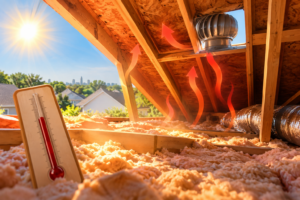
On a sunny summer afternoon, an attic can become very hot because the roof absorbs solar heat and transfers some of that heat into the attic.
The exact temperature depends on several factors, including:
- Outdoor temperature
- Direct sunlight
- Roof material and color
- Attic size
- Roof design
- Ventilation
- Insulation
- Air sealing
- Shade from nearby trees or buildings
There is no single temperature that defines a “too hot” attic for every home.
Instead of focusing only on one temperature reading, homeowners should look at the overall condition of the attic.
If the attic is excessively hot and poorly ventilated, has moisture problems, or contributes to unusually high cooling costs, it may be time to investigate.
Why Does an Attic Get So Hot?
The basic process is simple.
Sunlight hits the roof.
The roofing material absorbs solar energy and becomes hot. Some of that heat moves through the roofing system and into the attic.
If the hot air is not able to escape efficiently, it can remain trapped.
At the same time, if the attic floor does not have adequate insulation and air sealing, heat can affect the living space below.
This is why attic ventilation and insulation need to work together.
Ventilation helps move air through the attic, while insulation helps reduce heat transfer between the attic and the conditioned areas of the home.
1. Poor Attic Ventilation
One of the most common reasons an attic stays extremely hot is inadequate ventilation.
A properly designed attic ventilation system generally needs a way for air to enter and a way for air to leave.
If air cannot circulate properly, hot air may accumulate.
Signs that ventilation could be part of the problem include:
- Very hot attic air
- Poor airflow
- Excessive moisture
- Condensation
- Deteriorating insulation
- Roof-related moisture problems
However, adding a vent does not automatically solve every attic problem.
Ventilation needs to be designed around the specific roof and attic structure.
2. Not Enough Intake Vents
Many homeowners focus on exhaust vents but forget about intake ventilation.
Intake vents allow outdoor air to enter the attic.
They are commonly located near the lower portions of the roof, such as at the soffits.
If exhaust vents are present but there is not enough intake airflow, the ventilation system may not work as intended.
This is why a contractor should look at the entire ventilation system rather than simply adding another roof vent.
3. Not Enough Exhaust Ventilation
Hot air needs a way to leave the attic.
Exhaust ventilation can be provided through different systems depending on the roof design.
Common examples include:
- Ridge vents
- Box vents
- Gable vents
- Other roof ventilation systems
The right setup depends on the home’s design and existing ventilation.
More vents are not necessarily better. The intake and exhaust system needs to work together.
4. Inadequate Attic Insulation
Insulation plays a different role from ventilation.
Ventilation helps manage air movement within the attic.
Insulation helps reduce heat transfer between the attic and the living space below.
If attic insulation is inadequate, heat can move more easily into the rooms below.
You may notice:
- Upstairs rooms becoming unusually warm
- Air conditioning running for long periods
- Uneven temperatures between floors
- Higher cooling demands
- Hot ceilings or rooms below the attic
A home can have adequate ventilation but still have an insulation problem.
5. Air Leaks Between Your Home and Attic
Small openings between the living space and attic can allow conditioned air to escape and unwanted heat or moisture to move through the building.
Potential areas include:
- Attic access doors
- Recessed lighting openings
- Plumbing penetrations
- Electrical penetrations
- Duct openings
- Gaps around pipes
- Other openings in the ceiling
Air sealing these areas can be an important part of improving attic performance.
6. Dark Roofing Materials
Roof color can affect how much solar energy the roof absorbs.
Dark-colored roofing materials can become very hot when exposed to direct sunlight.
That does not mean homeowners should automatically replace a dark roof because the attic is hot.
Roof color is only one factor.
Ventilation, insulation, roof design, shading, and the overall roofing system can have a significant effect on attic conditions.
If you are replacing your roof anyway, you can discuss roofing material and color options with your contractor.
7. The Roof Design Can Affect Heat
Some homes naturally have attic spaces that are more difficult to ventilate.
For example, a roof with complicated sections, limited soffit areas, or enclosed attic spaces may not have the same airflow as a simple roof design.
Dormers, additions, valleys, and other architectural features can create areas where air movement is more difficult.
A professional inspection can help identify areas where ventilation may be limited.
8. Blocked Soffit Vents
Even when a home has soffit vents, they may not be functioning properly.
Insulation can sometimes block airflow near the soffits.
Debris, paint, or other obstructions can also affect ventilation.
If outside air cannot enter through the intended intake areas, the attic ventilation system may not perform properly.
This is one reason attic ventilation should be inspected as a complete system.
9. Exhaust Fans May Be Affecting Attic Airflow
Bathroom and kitchen exhaust fans should normally vent to the exterior rather than simply releasing moist air into the attic.
If an exhaust fan terminates in the attic, warm and humid air can enter the space.
Over time, this can contribute to moisture and condensation problems.
If you notice moisture or condensation in your attic, check whether bathroom or other exhaust ducts are properly routed to the exterior.
Does a Hot Attic Increase Your Air Conditioning Costs?
It can contribute to increased cooling demands, particularly when insulation and air sealing are inadequate.
If the attic transfers a significant amount of heat into the living areas below, your cooling system may need to work harder to maintain comfortable indoor temperatures.
However, a hot attic is not automatically the cause of a high electric bill.
Other factors can include:
- Air conditioning efficiency
- Home insulation
- Window performance
- Air leaks
- Thermostat settings
- Home size
- Outdoor temperatures
- Ductwork
- Appliance use
If your upstairs rooms are consistently hotter than the rest of your home, an evaluation of the attic and building envelope can help identify the cause.
Can a Hot Attic Damage Your Roof?
Heat alone does not necessarily mean your roof is being damaged.
However, poor attic conditions can contribute to roofing and moisture problems.
Excessive heat combined with poor ventilation may contribute to faster aging of some roofing materials.
Moisture is another concern.
When warm, humid air reaches cooler surfaces, condensation can form. Repeated moisture exposure can affect wood, insulation, and other building materials.
This is why attic performance should be considered as part of the overall health of the home.
Signs Your Attic May Have a Ventilation or Insulation Problem
A hot attic is only one clue.
Look for other warning signs such as:
Upstairs Rooms Are Much Hotter
If the second floor is consistently uncomfortable even when the air conditioner is running, the attic may be contributing to the problem.
High Cooling Demand
An unusually high cooling load can sometimes be related to poor insulation or air leakage.
Condensation
Moisture on roof decking, nails, ducts, or other surfaces can indicate an attic moisture problem.
Musty Odors
A persistent musty smell may indicate unwanted moisture.
Damaged or Discolored Wood
Dark staining or deterioration on roof decking should be investigated.
Wet or Compressed Insulation
Insulation that is wet or has been disturbed may not perform properly.
Visible Gaps
Gaps around attic penetrations can allow air movement between the home and attic.
What Can You Do About a Hot Attic?
The solution depends on what is causing the problem.
Improve Intake and Exhaust Ventilation
If the existing ventilation system is inadequate, improvements may be possible.
A contractor can evaluate the existing intake and exhaust arrangement and determine whether changes are appropriate.
Improve Attic Insulation
If insulation is insufficient, adding or replacing insulation may reduce heat transfer into the living areas.
Air Seal the Attic Floor
Sealing gaps and penetrations can reduce unwanted air movement between the home and attic.
Keep Soffit Vents Clear
Make sure intended intake areas are not blocked by insulation or other materials.
Check Exhaust Ducts
Bathroom and kitchen exhaust ducts should be properly routed to the exterior.
Inspect for Moisture
If you find condensation, stains, wet insulation, or damaged wood, identify the source before simply adding more insulation or ventilation.
Should You Add More Roof Vents?
Not necessarily.
This is an important point for homeowners.
If you have a hot attic, the answer is not always “add more vents.”
A ventilation system needs balanced airflow.
Adding exhaust vents without adequate intake ventilation may not provide the improvement you expect.
Likewise, installing vents in the wrong locations can interfere with the way air moves through the attic.
Before modifying the roof, have the existing ventilation system evaluated.
Does a Ridge Vent Make an Attic Cooler?
A ridge vent can be part of an effective attic ventilation system, but its performance depends on the overall system.
A ridge vent works best when it is paired with appropriate intake ventilation.
If soffit intake is blocked or insufficient, simply installing a ridge vent may not solve the problem.
The design of the roof and attic should be considered before choosing a ventilation solution.
Should You Install a Powered Attic Fan?
Powered attic fans are sometimes promoted as a quick solution for hot attics.
But homeowners should understand that attic fans are not appropriate for every home.
The existing ventilation system, air sealing, insulation, and attic configuration should be evaluated first.
If a powered fan is installed without addressing other problems, it may not solve the underlying issue.
In some situations, improperly configured fans can also affect pressure relationships between the attic and living space.
The best solution depends on the home.
When Should You Have Your Attic Inspected?
Consider having your attic evaluated if:
- It becomes extremely hot every summer
- Upstairs rooms are consistently too warm
- You notice condensation
- You find water stains
- Insulation appears damaged
- Roof decking looks discolored
- You notice musty odors
- Your roof has ventilation concerns
- You are planning a roof replacement
An inspection can help determine whether the issue is related to ventilation, insulation, air leakage, moisture, roofing components, or a combination of factors.
How to Improve Attic Ventilation in an NJ Home
There is no one-size-fits-all solution for every New Jersey home.
A contractor may evaluate:
- Existing soffit vents
- Ridge vents
- Gable vents
- Other exhaust vents
- Attic insulation
- Air sealing
- Roof design
- Roof penetrations
- Moisture levels
- Condition of the roof decking
The goal is not simply to install more vents. The goal is to create a properly functioning attic system.
Frequently Asked Questions
Why is my attic so hot in summer?
Attics naturally become hot because the roof absorbs heat from the sun. Excessive attic temperatures can be made worse by poor ventilation, inadequate insulation, blocked intake vents, air leaks, roof design, and other factors.
How hot is too hot for an attic?
There is no single temperature that applies to every attic. Outdoor temperature, roof exposure, insulation, ventilation, and attic design all affect conditions. A professional evaluation is more useful than relying on one temperature reading.
Does attic ventilation really help?
Properly designed attic ventilation can help manage heat and moisture within the attic. However, ventilation needs to work together with adequate intake airflow, insulation, and air sealing.
Can poor ventilation damage my roof?
Poor attic conditions can contribute to heat and moisture problems that may affect roofing materials and other parts of the home over time.
Should I add more vents if my attic is hot?
Not automatically. Adding vents without evaluating the existing ventilation system may not solve the problem. Intake and exhaust ventilation need to work together.
Why is my upstairs hotter than downstairs?
Heat naturally rises, and the upper floor may also be more exposed to heat from the attic. Poor insulation, air leakage, windows, ductwork, and attic ventilation can all contribute.
Can attic insulation make my house cooler?
Adequate attic insulation can reduce heat transfer between the attic and living areas. If your existing insulation is insufficient or damaged, improving it may help with indoor comfort.
Should bathroom fans vent into the attic?
Bathroom exhaust fans should be properly vented to the exterior. Releasing warm, moist bathroom air into the attic can contribute to moisture and condensation problems.
Can a roof inspection identify attic ventilation problems?
A roof and attic evaluation can help identify visible issues with roofing components, ventilation, insulation, moisture, and other conditions that may be contributing to an unusually hot attic.
Keep Your NJ Attic and Roof in Good Condition
A hot attic is common during a New Jersey summer, but an excessively hot attic combined with poor airflow, moisture, damaged insulation, or uncomfortable rooms below deserves attention.
The solution is not always a new roof or another ventilation fan.
Sometimes the problem is inadequate intake ventilation. In other homes, insulation, air sealing, moisture, or the existing roof design may be the bigger issue.
Finding the actual cause first can help you avoid unnecessary work and focus your budget on the improvements your home really needs.
If your attic is unusually hot, your upstairs rooms are difficult to cool, or you have noticed moisture or other attic problems, National Home Improvements can help you evaluate the condition of your roofing and home exterior and determine what work may be appropriate. Contact us to discuss your New Jersey home improvement project and request an inspection or estimate.