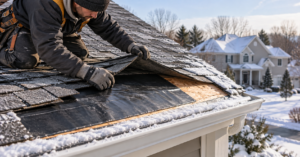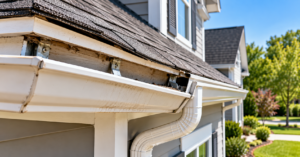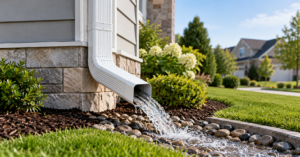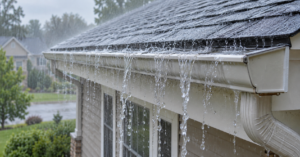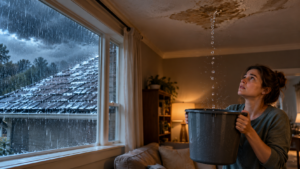
When homeowners hear about a new roof, they often think about shingles, flashing, gutters, and ventilation. But there is another important component underneath the shingles that can help protect vulnerable areas of the roof: ice and water shield.
So, what exactly is it?
Ice and water shield is a self-adhering waterproof membrane installed beneath roofing materials in areas that may be especially vulnerable to water intrusion. It can provide an additional layer of protection around roof edges, valleys, penetrations, and other critical areas.
For New Jersey homeowners, this type of roof underlayment can be particularly relevant because roofs have to deal with rain, snow, ice, wind, and repeated temperature changes.
However, ice and water shield is not a replacement for proper shingles, flashing, drainage, ventilation, or professional roof installation.
Let’s look at how it works and where it can be useful.
What Is Ice and Water Shield?
Ice and water shield is a type of self-adhering roofing membrane designed to provide additional protection against water intrusion.
Unlike traditional roofing underlayment, which may be mechanically fastened or installed using other methods, self-adhering membranes use an adhesive backing to bond to the roof deck.
The membrane is installed beneath the exterior roofing material.
A typical roofing system may include several layers, such as roof decking, underlayment, ice and water protection in applicable areas, flashing around vulnerable details, and shingles or another roof covering.
The exact roofing assembly depends on the roof design, materials, manufacturer requirements, and applicable building requirements.
Why Is It Called Ice and Water Shield?
The name describes the two types of conditions the membrane is designed to help address.
Water
Rainwater can enter vulnerable areas of a roof when conditions are unfavorable or when water gets beneath the primary roofing material. A properly installed membrane can provide an additional water-resistant barrier beneath the roof covering.
Ice
In colder weather, melting snow can refreeze in certain areas of a roof and create conditions associated with ice dams. Ice dams can interfere with normal water drainage and allow water to collect near roof edges. An ice and water protection membrane can provide an additional layer of protection in vulnerable areas. It is important to understand that the membrane itself does not prevent ice dams from forming.
Why Does Ice and Water Shield Matter in New Jersey?
New Jersey homes experience a wide range of weather conditions throughout the year.
Depending on the season and location, a roof may be exposed to:
- Heavy rain
- Snow
- Freezing temperatures
- Ice
- Freeze-thaw cycles
- Strong winds
- Temperature changes
These conditions can place additional stress on roofing materials and vulnerable roof details. A roofing membrane can provide an additional layer of protection where water intrusion is more likely to occur.
However, the complete roofing system still matters. A properly installed roof should also have appropriate:
- Shingles or roof covering
- Flashing
- Underlayment
- Ventilation
- Roof drainage
- Valleys
- Penetration details
Ice and water shield is one part of the system, not the entire solution.
Where Is Ice and Water Shield Installed?
The exact installation locations can vary depending on the roof design, local requirements, roofing manufacturer specifications, and the contractor’s installation approach.
Common vulnerable areas can include:
1. Roof Eaves
Roof eaves are one area where ice and water protection may be particularly important. In cold conditions, snow can accumulate on the roof and melt. If water encounters an ice dam near the roof edge, normal drainage can become restricted.
A properly installed membrane in the appropriate area can provide additional protection beneath the roofing material.
2. Roof Valleys
Roof valleys are another important area. A valley collects water from two roof slopes and directs it toward the lower part of the roof. Because of the amount of water moving through this area, valleys require careful installation.
Ice and water protection may be used beneath valley roofing materials as part of the overall waterproofing strategy.
The exact installation method depends on the roofing system and applicable requirements.
3. Around Roof Penetrations
Roofs contain various penetrations, including:
- Plumbing vents
- Chimneys
- Skylights
- Roof vents
- Other roof-mounted components
These areas require careful flashing and waterproofing.
A membrane can provide additional protection around some of these vulnerable areas, but it does not replace properly installed flashing.
4. Around Certain Roof Transitions
Changes in roof direction, slope, or material can create areas where water needs to be carefully managed. Depending on the design, these transitions may receive additional waterproofing protection.
A roofing professional should determine the appropriate approach based on the specific roof.
What Is an Ice Dam?
An ice dam is a buildup of ice along part of a roof edge that can interfere with the normal flow of melting snow.
A simplified example looks like this:
Snow accumulates → heat causes some snow to melt → water moves toward the colder roof edge → water freezes → ice builds up → drainage becomes restricted.
If water becomes trapped behind the ice, it may find pathways beneath roofing materials. Ice and water protection can provide an additional barrier in vulnerable areas, but it does not eliminate the underlying causes of ice dams.
Does Ice and Water Shield Prevent Ice Dams?
No. This is an important distinction. Ice and water shield is designed to help protect the roof deck from water intrusion in vulnerable areas. It does not stop snow from accumulating or prevent ice from forming.
Other factors can influence ice-dam formation, including:
- Attic insulation
- Air leakage
- Roof temperature
- Exterior temperature
- Snow accumulation
- Roof design
- Ventilation
If a home has recurring ice-dam problems, addressing the broader roof and attic conditions may be necessary.
What Are the Benefits of Ice and Water Shield?
When properly selected and installed, ice and water protection can provide several potential benefits.
Additional Water Protection
It creates another protective layer beneath the primary roof covering.
Protection in Vulnerable Areas
It can be especially useful around roof edges, valleys, and other areas where water management is important.
Self-Adhering Membrane
Many products adhere directly to the roof deck, helping create a continuous membrane when properly installed.
Additional Protection During Severe Weather
The membrane can provide another layer of defense when rain, snow, or ice creates challenging roof conditions.
Helps Protect the Roof Deck
If water gets beneath the exterior roofing material, an appropriate membrane can help reduce the risk of water reaching the roof deck.
However, performance depends heavily on the product, installation method, roof design, and surrounding roofing components.
What Are the Limitations?
Ice and water shield is useful, but it should not be treated as a cure-all for roofing problems.
It Does Not Replace Shingles
The primary roof covering still needs to be properly selected and installed.
It Does Not Replace Flashing
Chimneys, vents, skylights, walls, and other roof penetrations require appropriate flashing.
It Does Not Fix Poor Drainage
If gutters or downspouts are not moving water properly, adding a membrane does not solve the drainage issue.
It Does Not Prevent Ice Dams
The membrane can provide additional protection, but it does not eliminate the conditions that create ice dams.
Installation Matters
Improper installation can reduce the effectiveness of the membrane.
The membrane needs to be installed according to the manufacturer’s instructions and the requirements applicable to the roofing system.
Is Ice and Water Shield Required on Every Roof in New Jersey?
Not necessarily in every location or on every roof. The requirements for roofing underlayment and ice-barrier protection can depend on the roof design, location, applicable building codes, and other factors. For that reason, homeowners should not assume that one installation approach applies to every New Jersey home.
When planning a roof replacement, ask the contractor which areas will receive ice and water protection and why.
Does My NJ Home Need Ice and Water Shield?
The answer depends on your roof.
Factors that may be relevant include:
- Roof pitch
- Roof design
- Roof valleys
- Roof eaves
- Climate exposure
- Snow and ice conditions
- Roof penetrations
- Local requirements
- Manufacturer specifications
- Existing roofing conditions
A professional roofing assessment can help determine where additional waterproofing protection makes sense.
Questions to Ask Your Roofing Contractor
If you are getting a new roof, don’t be afraid to ask exactly what is being installed beneath the shingles.
Ask:
- Will you install ice and water shield?
Ask which areas will receive it.
- Where will the membrane be installed?
Ask whether the installation includes vulnerable areas such as eaves and valleys where appropriate.
- What product are you using?
Ask for the product name and specifications.
- Is the installation compliant with applicable requirements?
Your contractor should be able to explain the relevant installation requirements for your project.
- How does the membrane work with the flashing?
The membrane and flashing should work together as part of the overall water-management system.
- How will roof valleys be protected?
Valleys deserve particular attention because they collect water from multiple roof slopes.
- How will you address ice-dam concerns?
If your home has a history of ice dams, ask what other measures should be considered.
- What happens if the roof has existing water damage?
If the roof deck is damaged, the contractor should explain how that condition will be addressed before the new roofing materials are installed.
Ice and Water Shield vs. Regular Roofing Underlayment
These materials can serve different purposes within a roofing system.
| Feature | Ice and Water Shield | Standard Roofing Underlayment |
| Self-adhering | Commonly yes | Depends on product |
| Waterproof membrane | Designed for additional water protection | Product dependent |
| Vulnerable roof areas | Often used | May also be used |
| Roof-wide installation | Depends on design and requirements | Commonly used beneath roof covering |
| Ice-dam protection | Can provide additional protection | Not necessarily designed for this purpose |
The exact products and installation methods vary, so homeowners should ask their roofing contractor what materials are being used and where.
What Happens If a Roof Does Not Have Ice and Water Protection?
The absence of an ice and water membrane does not automatically mean a roof will leak.
Roof performance depends on the complete system, including:
- Roof covering
- Underlayment
- Flashing
- Drainage
- Ventilation
- Roof design
- Installation quality
- Weather exposure
However, in areas where additional ice and water protection is appropriate or required, leaving vulnerable areas without it can reduce an important layer of protection.
If you are replacing an older roof, ask the contractor how the new roofing system will protect vulnerable areas.
Can Ice and Water Shield Be Added to an Existing Roof?
Usually, installing the membrane requires access beneath the existing roof covering. Because the membrane is generally installed beneath the shingles or other roof covering, adding it to an existing finished roof is not typically as simple as applying it on top.
If you are already planning a roof replacement, that is an appropriate time to discuss the membrane with your roofing contractor.
How Does Ice and Water Shield Work With Roof Flashing?
The membrane and flashing have different but complementary roles. Flashing helps direct water away from vulnerable roof details. The membrane provides an additional protective layer beneath the roofing materials. For example, around a chimney, the flashing system needs to be correctly designed and installed. The membrane may provide additional protection beneath the surrounding roofing materials.
Neither component should be considered a substitute for the other.
Common Mistakes Homeowners Should Avoid
Assuming the Membrane Prevents All Roof Leaks
No roofing product can compensate for poor installation or neglected maintenance.
Assuming It Prevents Ice Dams
It does not.
Choosing a Product Without Considering the Roof
Different roofing systems and roof designs have different requirements.
Ignoring Flashing
Roof penetrations and transitions still need proper flashing.
Focusing Only on the Roof Covering
The roof is a system. What is underneath the shingles can be just as important as what you see from the ground.
When Should You Ask About Ice and Water Shield?
The best time is before a roof replacement or major roofing project begins.
Ask the contractor to explain:
- What underlayment will be installed
- Where ice and water protection will be used
- How roof valleys will be protected
- How eaves will be protected
- How flashing will be installed
- How existing roof damage will be handled
- Whether the installation meets applicable requirements
Getting these details before work begins can help you understand what you are paying for and how the roofing system is designed to manage water.
Frequently Asked Questions
What is ice and water shield on a roof?
Ice and water shield is a self-adhering roofing membrane installed beneath the roof covering to provide additional protection against water intrusion in vulnerable areas.
Is ice and water shield necessary in New Jersey?
It may be appropriate or required in certain roof areas depending on the roof design, location, applicable requirements, and roofing system. A contractor should evaluate the specific project.
Where is ice and water shield installed?
It is commonly used in vulnerable areas such as roof eaves and valleys, with additional applications depending on roof design and applicable requirements.
Does ice and water shield stop roof leaks?
It can provide an additional layer of protection against water intrusion, but it does not replace proper shingles, flashing, drainage, ventilation, or installation.
Does ice and water shield prevent ice dams?
No. It can help protect against water intrusion associated with ice-dam conditions, but it does not prevent ice dams from forming.
Is ice and water shield waterproof?
Ice and water protection membranes are designed to provide water-resistant or waterproof protection according to the specific product’s specifications. Contractors should follow the manufacturer’s installation requirements.
Can ice and water shield be installed over old shingles?
Installation methods vary, but the membrane is generally installed beneath the primary roof covering. A contractor should determine the appropriate installation method for the specific roofing project.
Is ice and water shield the same as roofing underlayment?
Not exactly. Ice and water shield is a specialized membrane designed for additional protection in vulnerable areas, while roofing underlayment is a broader category of materials installed beneath the roof covering.
Final Thoughts
Ice and water shield is an additional layer of protection that can help defend vulnerable areas of a roof against water intrusion. For New Jersey homeowners, it is worth understanding because roofs can experience rain, snow, ice, freezing temperatures, and repeated weather changes.
But the membrane is only one part of a complete roofing system. Proper flashing, shingles, underlayment, ventilation, roof design, gutters, and drainage all contribute to how well a roof manages water.
If you are planning a roof replacement, ask your contractor where ice and water protection will be installed, what product will be used, and how it fits into the overall roofing system.
National Home Improvements can help homeowners evaluate roofing needs and discuss the components that may be appropriate for a New Jersey roofing project. Contact NHI to discuss your roof and determine whether an inspection or replacement project is appropriate.