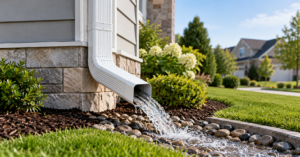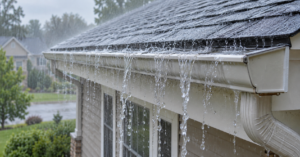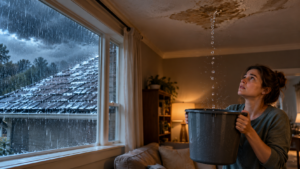
Your gutters collect rainwater from the roof, but the downspouts determine where that water goes next. If a downspout releases water directly beside your home’s foundation, repeatedly floods a walkway, or sends water toward the house, it can contribute to drainage and moisture problems. Roof downspouts should generally discharge rainwater far enough away from the foundation that it does not collect against the house. The best discharge location depends on your property’s grading, soil, landscaping, drainage system, and local requirements.
For New Jersey homeowners, proper downspout placement is key to managing roof runoff and reducing unnecessary water around the foundation.
Why Does Downspout Drainage Matter?
Every time it rains, your roof collects a large amount of water. That water moves into the gutters and then through the downspouts. If the downspout releases the water too close to the house, the ground around the foundation can become saturated.
Over time, poor drainage can contribute to:
- Water pooling near the house
- Basement or crawl-space moisture concerns
- Damage to landscaping
- Water flowing toward sidewalks or other unwanted areas
- Wet areas around the foundation
- Soil erosion
- Muddy landscaping
A properly functioning gutter system is therefore more than just a way to keep rainwater off the exterior walls. It is part of the home’s overall water-management system.
Where Should Roof Downspouts Drain?
There is no single discharge location that works for every New Jersey property. A good downspout discharge point should direct water away from the foundation and toward an appropriate drainage area, while avoiding locations where water can create another problem.
Depending on the property, this may include
- A suitable area of the yard with positive drainage
- A properly designed drainage system
- An approved underground drainage system
- A suitable stormwater connection where permitted
- Another professionally designed discharge location
The key is not simply moving the water away from the downspout. The water needs to have somewhere appropriate to go.
How Far Should Downspouts Drain From the Foundation?
A commonly used approach is to extend downspout discharge away from the foundation rather than allowing water to fall directly beside the house. However, the appropriate distance can vary by property. Factors such as ground slope, soil type, foundation design, landscaping, existing drainage, local regulations, basement or crawl-space conditions, and neighboring properties can affect the best solution.
Rather than choosing a distance based only on a general rule, look at where the water actually travels after leaving the downspout. If water flows back toward the foundation, the discharge point is not solving the drainage problem even if the downspout has been extended.
1. Downspout Extensions
One of the simplest solutions for a downspout that discharges too close to the house is a downspout extension. An extension carries water farther away before releasing it. This can be useful when:
- The downspout ends close to the foundation
- Water is pooling beside the house
- The ground slopes toward the house
- Water is damaging nearby landscaping
Extensions can be above ground or incorporated into other drainage solutions. The important part is that the extension should discharge water somewhere appropriate rather than simply moving the problem a few feet farther away.
2. Make Sure the Ground Slopes Away From the House
The grading around your home plays an important role in drainage. Ideally, surface water should move away from the foundation rather than toward it. If the ground slopes toward the house, water discharged from a downspout may eventually flow back toward the foundation. You may notice water pooling near the foundation, soil erosion, muddy areas, repeatedly wet soil, water flowing toward basement windows, and damp areas after rain. In these situations, extending the downspout alone may not completely solve the problem.
The surrounding grading and drainage may also need to be evaluated.
3. Underground Downspout Drainage
Some homeowners use underground drainage systems to move water away from visible downspout outlets. An underground system can provide a cleaner appearance and may be useful when above-ground extensions would interfere with walkways, driveways, landscaping, patios, and property access. However, underground drainage needs to be designed and maintained properly.
A buried pipe that becomes blocked or damaged can create drainage problems that are difficult to see from the surface. Before installing an underground downspout drainage system, consider where the water will ultimately discharge.
4. Avoid Discharging Water Toward the Foundation
One of the most important rules of downspout placement is simple. Do not intentionally direct roof runoff toward the foundation. This includes situations where the downspout:
- Points directly toward the house
- Ends beside the foundation
- Discharges onto a surface that slopes toward the house
- Sends water toward basement entrances
- Releases water near foundation drainage problem areas
Even if the water disappears into the soil, that does not necessarily mean the drainage problem is solved. The water still has to move somewhere.
5. Be Careful Near Walkways and Driveways
Downspouts should also be positioned carefully around paved areas. If water repeatedly discharges onto a walkway, driveway, or other frequently used surface, it can create puddling, erosion around the edges, slippery conditions during freezing weather, landscaping damage, and unwanted water flow. In winter, water that reaches walkways and freezes can create an additional safety concern.
A drainage solution should therefore consider both the home and the areas people regularly use.
6. Do Not Send Water Onto a Neighbor’s Property
Downspout water should not simply be redirected onto a neighboring property. Doing so can create drainage problems for someone else and may violate local requirements or property rules. If your property has limited drainage space, an appropriate drainage solution should be planned rather than simply moving the discharge point toward the property line. When in doubt about local requirements, check with the appropriate local authority or a qualified professional.
7. Be Careful With Underground Drains
An underground drain can look like a simple solution because it keeps the discharge point out of sight. But the system still needs a clear path for water. Problems can occur if:
- The pipe becomes blocked
- The pipe is damaged
- The outlet becomes buried
- Soil collapses around the pipe
- The system does not have enough capacity
- The discharge location is poorly selected
If an underground downspout system repeatedly backs up during rain, the problem may be below ground rather than inside the gutter.
Common Downspout Drainage Mistakes
Several common mistakes can reduce the effectiveness of a gutter drainage system.
Downspout Ends Directly Beside the Foundation
This is one of the most obvious drainage problems. Rainwater from the roof is concentrated at one point and released next to the house.
Downspout Extension Is Too Short
An extension may technically move water away from the foundation but still leave the discharge point in an area where water flows back toward the house.
Water Is Discharged Toward a Low Spot
A low area may collect water every time it rains.
Downspout Discharges Onto a Walkway
This can create puddling and winter icing concerns.
Multiple Downspouts Discharge Into One Problem Area
Even if each individual downspout works correctly, concentrating too much roof runoff in one area can overwhelm the ground drainage.
Underground Drain Is Blocked
A hidden drainage system can make it harder to recognize the source of the problem.
Gutters Are Correct but Drainage Is Not
A homeowner may focus on the gutters while the real problem is where the downspouts release water.
How Do I Know If My Downspouts Are Draining Properly?
Watch what happens during and shortly after rainfall. Look for:
- Water pooling near the foundation
- Soil erosion below the downspout
- Water flowing toward the house
- Overflowing downspouts
- Standing water around basement windows
- Muddy areas near the foundation
- Water collecting at the end of a downspout extension
- Water backing up from an underground drainage system
You can also inspect the area after a storm. If the same location repeatedly remains wet long after other areas have dried, the drainage system may need attention.
What Should I Do If Water Is Pooling Near My Foundation?
First, determine where the water is coming from. If the water is coming from a downspout, check whether the discharge point is too close to the house or whether the extension is directing water into a low area. Also look at other possible sources, including:
- Roof runoff
- Surface grading
- Driveway drainage
- Patio drainage
- Plumbing or other water sources
Do not assume every wet area near a foundation is caused by a downspout. If the problem continues or you notice basement moisture, foundation concerns, or significant water accumulation, a professional evaluation may be appropriate.
Can Downspout Problems Cause Basement Moisture?
Poor exterior drainage can contribute to water accumulating around the foundation. However, basement moisture can have many possible causes. These can include:
- Surface water
- Poor grading
- Foundation cracks
- Drainage problems
- Plumbing leaks
- Groundwater
- Improperly discharged roof runoff
Because the source is not always obvious, identifying where the water originates is important before choosing a solution.
Should Downspouts Connect to an Underground Drain?
They can, but whether an underground drainage system is appropriate depends on the property and the available discharge location.
Before installing one, consider:
- Where will the water ultimately go?
- Can the system handle the expected water volume?
- Is the outlet accessible?
- Can the system be maintained?
- Could the pipe become blocked?
- Are there local requirements that apply?
An underground system should solve the drainage problem rather than simply hide it.
When Should You Call a Professional?
Consider having your drainage system evaluated if:
- Water repeatedly pools near the foundation
- Downspouts discharge directly beside the house
- Extensions are not solving the problem
- Water flows back toward the foundation
- Underground drains repeatedly back up
- Gutters overflow during heavy rain
- You notice basement moisture
- Soil is eroding around the downspouts
- You are planning a new drainage system
- You are unsure where your roof runoff should go
A professional can evaluate the relationship between the roof, gutters, downspouts, grading, and drainage areas.
How New Jersey Weather Affects Downspout Drainage?
New Jersey homes experience a variety of weather conditions throughout the year. Heavy rain can send substantial amounts of water from a roof into the gutter system in a short period. Winter conditions can also affect exterior drainage. Water that is discharged onto walkways or other surfaces can freeze when temperatures drop. For this reason, homeowners should consider downspout placement as part of their home’s overall exterior maintenance rather than treating it as a minor gutter detail.
What If My Downspouts Keep Overflowing?
If the downspouts overflow even when the gutters are clean, there may be another problem. Possible causes include:
- Downspout blockage
- Undersized downspouts
- Excessive roof runoff
- Poor gutter slope
- Poor gutter design
- Underground drainage blockage
You can learn more about this issue in our related guide. The name is: Why Are My Gutters Overflowing When They Are Not Clogged?
The two problems can be connected, so it is useful to evaluate the entire roof drainage system rather than only one component.
Conclusion
Your gutters can only do their job if the water has somewhere appropriate to go. A downspout should not simply move rainwater from the gutter to the ground beside your house. It should direct that water toward a suitable drainage area while keeping runoff away from the foundation. If your downspouts discharge too close to the house, repeatedly create standing water, or send runoff toward the foundation, the problem should be addressed rather than ignored.
Proper roof drainage can be an important part of protecting the home’s exterior and managing rainwater around the property for New Jersey homeowners.
If you are experiencing recurring gutter or downspout drainage problems, National Home Improvements can help evaluate the roof and exterior conditions that are causing them. Contact NHI to discuss your property and determine whether an inspection or repair is appropriate.
FAQs
How far should a downspout be from the foundation?
There is no single distance that works for every property. The important consideration is whether the discharge carries water away from the foundation and prevents it from flowing back toward the house.
Should downspouts be connected to underground pipes?
An underground drainage system can be appropriate for some properties, particularly where above-ground extensions interfere with walkways or landscaping. It should have a suitable discharge point and be designed for proper drainage.
Why is water pooling under my downspout?
The discharge area may have poor grading, compacted soil, inadequate drainage, or an extension that releases water into a low spot. An underground pipe may also be blocked if one is installed.
Where should roof downspouts drain?
Downspouts should discharge roof water away from the foundation and toward an appropriate drainage area. The best location depends on the property’s grading, soil, drainage system, and local requirements.
Can downspouts drain onto the lawn?
They can discharge onto a suitable part of the yard when the grading allows water to move away from the house and the discharge does not create erosion, pooling, or other drainage problems.
Can downspouts cause foundation problems?
Poorly directed roof runoff can contribute to excessive water accumulation around the foundation. If water repeatedly collects beside the home, the drainage arrangement should be evaluated.
Should a downspout discharge onto a driveway?
It depends on the property’s drainage design. If water pools, freezes, erodes surrounding areas, or flows toward the house, the discharge location should be reconsidered.
Can I extend my downspout myself?
A simple above-ground extension may be manageable for some homeowners, but the discharge location still needs to be appropriate. If drainage problems continue, professional evaluation may be necessary.