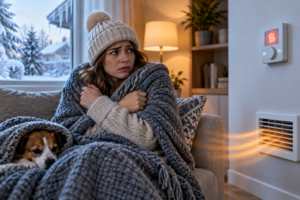
If your New Jersey home still feels cold even when the heat is running, the heating system may not be the only thing to look at.
A house can lose heat through windows, doors, the attic, walls, and other parts of the exterior. Air leaks can also allow cold outdoor air to enter while warm indoor air escapes.
This can make some rooms uncomfortable, cause uneven temperatures throughout the house, and make your heating system work harder.
For New Jersey homeowners, winter weather can make these problems especially noticeable. Cold temperatures, wind, and seasonal changes can expose weaknesses in a home’s insulation and exterior.
The good news is that you do not necessarily need a major renovation to make your home more comfortable. The first step is finding out where the heat is being lost.
In this guide, we will look at the most common reasons a house stays cold in winter and what you can do about them.
Why Is My House Cold Even When the Heat Is On?
There are several possible reasons.
The most common include:
- Drafty windows
- Gaps around doors
- Poor attic insulation
- Air leaks
- Insufficient insulation in certain areas
- Problems around siding and exterior walls
- Poorly sealed penetrations
- Uneven heating or airflow
- Cold floors, ceilings, or exterior walls
Sometimes there is one main problem. In other homes, several smaller issues work together.
For example, you may have older windows, insufficient attic insulation, and air leaks around the exterior of the house.
Fixing only one of these problems may improve comfort, but addressing the major sources of heat loss can make a much bigger difference.
1. Your Windows May Be Letting Cold Air In
Windows are one of the first places to check if your home feels drafty.
Older or damaged windows may have:
- Worn weatherstripping
- Failed seals
- Cracked frames
- Gaps around the frame
- Poor-fitting sashes
- Single-pane glass
- Deteriorated caulking
You may notice cold air near the window even when the heating system is working normally.
How to Check for Drafty Windows
On a cold or windy day, stand near your windows and feel for noticeable air movement.
Pay particular attention to:
- Window corners
- Where the window meets the frame
- Areas around trim
- Gaps between the frame and wall
A professional evaluation can help determine whether the problem is a minor sealing issue or whether the windows themselves are contributing significantly to heat loss.
Not every drafty window needs to be replaced. In some cases, repairs or improved sealing may be appropriate.
2. Doors Can Let Warm Air Escape
Exterior doors can also create noticeable drafts.
Cold air may enter around:
- Door frames
- Thresholds
- Weatherstripping
- Door bottoms
- Locks and hardware
- Gaps between the door and frame
If you can see daylight around a closed exterior door, that is an obvious sign that the opening may not be properly sealed.
Replacing worn weatherstripping or improving the door seal may help in some situations.
If the door or frame is damaged or poorly fitted, more extensive work may be necessary.
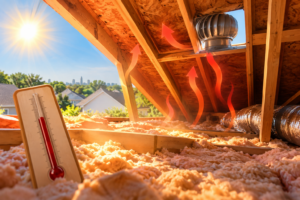
3. Your Attic May Not Have Enough Insulation
Heat naturally rises.
That makes the attic an important area to consider when a home feels cold in winter.
If there is not enough insulation between your living space and attic, warm indoor air can escape upward more easily.
You may notice:
- Cold ceilings
- Cold upstairs rooms
- Uneven temperatures
- High heating demand
- A large temperature difference between floors
An attic inspection can help determine whether insulation levels and air sealing are adequate.
4. Air Leaks Can Make a Big Difference
A home does not need a large opening to lose heat.
Small gaps and cracks around the building envelope can allow cold outdoor air to enter.
Potential air leakage areas include:
- Windows
- Doors
- Utility penetrations
- Electrical outlets
- Plumbing openings
- Attic access panels
- Foundation areas
- Wall penetrations
- Gaps around exterior materials
On windy winter days, these leaks may become much more noticeable.
Air sealing can sometimes improve comfort without requiring a major remodeling project.
5. Your Home May Have Insulation Problems
Insulation helps slow the transfer of heat between the inside and outside of your home.
If insulation is missing, damaged, compressed, or insufficient for the area, some rooms may become colder than others.
Potential problem areas include:
- Attic
- Exterior walls
- Floors above unheated spaces
- Areas around additions
- Garages connected to living spaces
- Older sections of the home
Older homes can be particularly difficult to evaluate because insulation may have been installed differently over the years.
If one room is consistently much colder than the rest of the house, the problem may be localized.
6. Your Siding May Be Part of the Problem
Siding is designed to protect the exterior of your home from weather, but the siding itself is only one part of the exterior wall system.
Problems with siding or the materials behind it can affect the performance of the exterior.
Potential concerns include:
- Damaged siding
- Missing sections
- Loose panels
- Gaps around windows and doors
- Poorly sealed penetrations
- Moisture intrusion
- Damaged areas behind the siding
If you notice damaged siding and your home also has cold exterior walls or drafts, it may be worth having the exterior evaluated.
However, siding should not automatically be blamed for every cold-room problem.
The insulation and air-sealing system behind the exterior also matter.
7. Cold Walls May Point to an Insulation or Air-Sealing Issue
Place your hand against an exterior wall on a cold day.
If certain walls feel significantly colder than others, it may indicate heat transfer through that section of the building envelope.
Possible causes include:
- Missing insulation
- Insufficient insulation
- Air leakage
- Moisture problems
- Poorly sealed penetrations
- Older construction methods
A thermal inspection or professional evaluation can help identify areas that deserve further investigation.
8. Your Attic Access Door Could Be Leaking Air
An attic access panel is easy to overlook.
If it is not properly sealed and insulated, warm air can escape into the attic.
You may notice that the ceiling or area around the attic opening feels colder than the surrounding space.
Adding appropriate weatherstripping and insulation to an attic access point may help, depending on its condition and construction.
9. Recessed Lights and Other Ceiling Openings Can Cause Heat Loss
Ceilings often contain openings for electrical, plumbing, lighting, and other systems.
If these areas are not properly sealed, air can move between the living space and attic.
Common locations include:
- Recessed lights
- Electrical wiring
- Plumbing pipes
- HVAC penetrations
- Attic access openings
These small areas can be difficult for homeowners to identify without an attic inspection.
10. Some Rooms May Be Cold Because of Heating Distribution
Not every cold-room problem is caused by the exterior of the house.
Your heating system and air distribution can also play a role.
For example, one room may be colder because of:
- Poor airflow
- Blocked vents
- Ductwork problems
- Room location
- Large windows
- High heat loss through exterior surfaces
If the heating system itself is not distributing heat properly, a home improvement contractor may not be the right professional to diagnose the mechanical issue.
In that situation, an HVAC professional may be needed.
However, if the heating system is operating normally and certain rooms remain cold, evaluating the building envelope can still be useful.
Why Is One Room Colder Than the Rest of the House?
This is a common question from homeowners.
If one room is consistently colder, look at what makes that room different.
It may have:
- More exterior walls
- Older windows
- A north-facing exposure
- Less insulation
- A room above an unheated area
- A room below an attic
- Poor air sealing
- A large exterior door
The location and construction of the room can provide useful clues.
Why Does My House Feel Cold but the Thermostat Says the Right Temperature?
Your thermostat measures the temperature at its location.
That does not mean every room in the house is the same temperature.
For example, your thermostat may read 70°F while a bedroom near an exterior wall feels considerably colder.
This can happen because of differences in:
- Air movement
- Insulation
- Windows
- Exterior walls
- Sun exposure
- Room size
- Heating distribution
If the problem is isolated to certain rooms, identifying those differences can help narrow down the cause.
Does Drafty Siding Make a House Cold?
Damaged or improperly installed siding can contribute to exterior problems, but siding is only one component of your home’s wall system.
Behind the siding there may be sheathing, insulation, weather-resistant barriers, and other materials.
If siding is damaged or there are gaps around exterior penetrations, those areas should be inspected.
The goal is to determine whether the problem is with the siding itself, the materials underneath it, insulation, air sealing, or a combination.
How Can I Find Where My House Is Losing Heat?
Start with the areas most likely to cause problems.
Check for noticeable drafts around:
- Windows
- Exterior doors
- Attic access
- Baseboards
- Electrical outlets on exterior walls
- Plumbing penetrations
- Fireplace areas
- Attic spaces
You can also look for:
- Uneven room temperatures
- Cold walls
- Cold floors
- Condensation
- Damaged insulation
- Moisture
- Visible gaps
For a more detailed assessment, a professional may use inspection methods that help identify areas of heat loss and air leakage.
What Can You Do to Make a Cold NJ Home More Comfortable?
The right solution depends on what the inspection finds.
Improve Window Sealing
If drafts are coming from windows, sealing or repairing the affected areas may help.
If the windows are old, damaged, or inefficient, replacement may be worth considering.
Improve Door Sealing
Replacing worn weatherstripping or addressing gaps around exterior doors can reduce drafts.
Improve Attic Insulation
If attic insulation is insufficient, improving it can reduce heat transfer between the attic and living areas.
Air Seal Problem Areas
Sealing gaps around penetrations, attic access points, windows, and doors can reduce unwanted airflow.
Repair Damaged Siding
If damaged siding is allowing moisture or air to enter the exterior wall system, repairs may be needed.
Replace Siding When Necessary
If siding is extensively damaged or nearing the end of its useful life, replacement may be considered.
The important thing is to identify the underlying problem before choosing a solution.
Should I Replace My Windows If My House Is Cold?
Not necessarily.
Window replacement can be beneficial when windows are old, damaged, poorly sealed, or contributing significantly to drafts and heat loss.
But replacing windows may not solve the problem if the actual cause is inadequate attic insulation or air leakage elsewhere.
Before making a large investment, identify where your home is losing heat.
Should I Add More Insulation?
Adding insulation can help when existing insulation is inadequate.
However, homeowners should not simply add insulation without checking the condition of the area first.
For example, if there is a moisture problem or significant air leakage, those issues may need to be addressed before additional insulation is installed.
A proper evaluation helps determine what the home actually needs.
When Should You Have Your Home Professionally Inspected?
Consider getting a professional evaluation if:
- Your home remains cold despite the heat running
- Some rooms are much colder than others
- You notice significant drafts
- Your windows feel cold or drafty
- Your exterior doors have visible gaps
- Your attic is poorly insulated
- You see damaged siding
- You notice moisture or condensation
- Your home is older and has never had an exterior evaluation
- You are planning window, siding, roofing, or other exterior improvements
A professional inspection can help connect the symptoms you are seeing with potential problems in the home’s exterior and building envelope.
What Should a Home Inspection Look At?
If your concern is heat loss, the evaluation should not focus on just one component.
Depending on the situation, areas to consider include:
- Windows
- Exterior doors
- Attic
- Insulation
- Air leakage
- Siding
- Roof-related areas
- Exterior wall conditions
- Moisture intrusion
- Areas around additions and extensions
Looking at these components together provides a better understanding of how your home is performing.
Frequently Asked Questions
Why is my house cold in winter even when the heat is on?
Your home may be losing heat through drafty windows, doors, insufficient insulation, attic areas, exterior walls, siding problems, or air leaks. Heating distribution can also contribute to uneven temperatures.
Why is my house so cold at night?
At night, there is no sunlight warming exterior surfaces, and outdoor temperatures usually fall. If your home has poor insulation, air leaks, or drafty windows and doors, the temperature difference may become more noticeable.
Why is my upstairs colder than downstairs?
The upstairs may feel colder because of insulation problems, air leakage, window conditions, room location, or heating distribution. An attic directly above the second floor can also affect comfort.
Can old windows make a house cold?
Yes. Older or poorly sealed windows can allow drafts and increase heat transfer. However, window condition should be evaluated along with insulation and other parts of the home’s exterior.
Can siding affect home insulation?
Siding is part of the exterior wall system, but insulation is usually behind the siding. Damaged siding can contribute to moisture or air-intrusion problems, while insufficient insulation can contribute to heat loss.
How do I know if my attic insulation is enough?
The amount and type of insulation needed depend on the home’s construction and other factors. A professional attic evaluation can help determine whether insulation is missing, insufficient, damaged, or improperly installed.
Can air leaks make my heating bill higher?
Air leaks can allow heated indoor air to escape and cold outdoor air to enter, potentially increasing the demand on your heating system.
Should I replace my windows or improve insulation first?
It depends on where the greatest heat loss is occurring. A home evaluation can help identify whether windows, attic insulation, air sealing, or another part of the building envelope should be addressed first.
Why are my exterior walls cold?
Cold exterior walls can be related to insulation levels, air leakage, moisture, construction, or the temperature difference between indoors and outdoors. If the difference is significant, the area may deserve professional evaluation.
Keep Your New Jersey Home Warmer This Winter
If your New Jersey home feels cold even though the heat is running, don’t immediately assume that your heating system is the problem.
The cause may be somewhere in the home’s exterior or building envelope.
Drafty windows, poorly sealed doors, insufficient attic insulation, air leaks, and damaged siding can all contribute to uncomfortable rooms and uneven temperatures.
The most effective approach is to find the source of the heat loss first and then choose the right improvement.
National Home Improvements helps New Jersey homeowners with roofing, windows, siding, and other home improvement projects. If your home feels unusually cold or drafty, contact us to discuss your concerns and determine whether an inspection or improvement project may be appropriate for your home.