Why Are My Roof Shingles Losing Granules?
If you happen to observe tiny, fine particles of sand building up in your drains, close to your downpipes, or anywhere else on the ground shortly after it rains normally, your asphalt-based roof tiles are probably shedding normal granules. This could be fairly typical, particularly on a more recent roofing system. However, excessive material degradation may also be an indication of worn-out asphalt, damage from storms, or a roof defect that needs to be taken care of.
Standard granules serve as a vital component of asphalt-based roofing shingles. They add to the hue and look of the roofing, whilst also protecting the base material from sunlight and normal weather. A lot of damage to granules may make the roofing vulnerable to wear and tear.
New Jersey residents are familiar with how unpredictable weather conditions like excessive precipitation, prevailing winds, hailstorms, and fluctuating temperatures may influence roof quality. The crucial question is not just whether you’re losing your standard granules, but what amount of degradation of granules is taking place and what is triggering it.
The following information is going to help you figure out what is considered typical and what is not, which signs of trouble you should be looking for, and when an expert roof inspection could prove beneficial.
What Do Granules Do on Asphalt Shingles?
Asphalt shingles typically possess a standard mineral granule coating on the uncovered exterior. These small fragments have crucial tasks to perform.
- Protect against ultraviolet radiation: Granules help shield the asphalt layer from direct sunlight, which can accelerate deterioration.
- Support weather resistance: They contribute to the shingle’s protective surface as it faces rain, wind, and changing weather conditions.
- Provide color and appearance: Mineral granules give shingles their finished color and texture.
- Help maintain the shingle’s intended performance: Losing a significant amount of the protective surface can leave the underlying asphalt more exposed.
The granules are not merely for decorative purposes. They constitute an integral component of the roof’s safeguarding framework, so any substantial loss is an indication for serious concern.
Is It Normal for New Roof Shingles to Lose Granules?
Yes. A few granule degradation is to be expected, especially right after an updated conventional asphalt roofing roof is erected.
In the process of production, surplus granules are sometimes loosely bound to the normal surface of the roofing material. A portion of this surplus material may be swept away through rainfall and ordinary weather contact. Property owners might notice that following the initial few downpours, they will have certain granules deposited in the drains.
This is not an indication that the new roofing material is inevitably faulty.
However, the level of loss in the granules, and the sequence of loss that occurs, are crucial. A tiny bit of loose soil cannot be considered exactly the same as massive piles, huge empty spaces, or roofing shingles that appear as though they have endured an excessive amount of wear and tear.
If your recently installed roofing has begun to lose a significant amount of granules, reach out to the roofing company that carried out the work. Photographs and documents may be helpful when identifying if the issue in question requires further investigation.
What Causes Excessive Shingle Granule Loss?
Several conditions can cause asphalt shingles to lose granules faster than expected.
1. An Aging Roof
As asphalt roofing shingles become progressively older, the components gradually wear down into pieces. Over a long period, periodic changes in temperature and severe weather contact may degrade the exterior.
You may notice:
- Granules collecting in gutters after ordinary rainfall.
- Shingles with uneven or visibly worn surfaces.
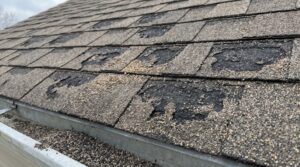
- Areas where the asphalt beneath the granules is becoming exposed.
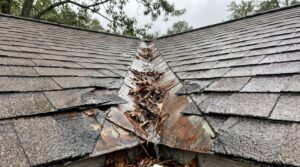
- Other signs of aging, such as curling, cracking, or missing shingles.
Roof repair is not dependent solely on granule loss. Take into account the lifespan of the roof as well as the overall condition, along with any additional damage.
If you’re uncertain whether replacement or repair would make a better choice, consider taking a peek at our guide pertaining to typical expenses for roofing replacement in New Jersey.
2. Heavy Rain and Storms
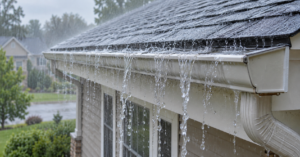
Heavy precipitation may wash unsecured particles down the standard gutters and drains. Strong winds and severe storms may also result in normal wear on roof shingles, particularly if the roofing structure has become worn out or deteriorating.
Following a hurricane, look over the soil for apparent signs of damage, like missing roofing shingles, normal debris, or an excessive amount of granules found surrounding gutters.
Gravel-covered gutters, however, do not constitute proof of storm damage done to the roof. However, an unexpected upward trend shortly after a severe storm – particularly when it happens to be followed by additional apparent shifts – is reason enough to conduct an investigation.
3. Hail Damage
A hailstorm may hit shingles made of asphalt with enough power to pull away the granules and damage the foundational substrate. Warning signs of problems may consist of isolated granule loss as well as collision defects, or normal wear to different external parts. A few hail-related damages cannot be readily apparent from ground level, as well as the look can vary based on the kind of shingle used, the condition of the shingle used, and the weather circumstances.
Avoid getting on a normal roof to check for severe impact damage. If you are concerned about damage from hail, arrange for a qualified professional to have a look at it and snap pictures of any harm that you can comfortably access.
4. Foot Traffic on the Roof
Gently walking on asphalt-based shingles may loosen the granules, particularly if the roofing materials are warm, stiff, or worn out.
Specific degradation is possible if the top layer has not been properly cared for because of normal roof repairs, a satellite dish setup, upkeep, visits, and various other routine tasks.
Never attempt to climb on the roof by yourself. A reputable roofing professional can identify if the apparent harm was brought about by pedestrian traffic or something else.
5. Poor Installation or Shingle Defects
Installation problems or defective materials can sometimes contribute to premature shingle deterioration. However, granule loss by itself is not enough to establish that a roof was installed incorrectly.
If a relatively new roof shows unusual wear, document the affected areas and contact the original installer. Keep any available installation paperwork and warranty information so the issue can be evaluated properly.
6. Long-Term Weather Exposure
New Jersey roofs experience changing weather throughout the year. Summer heat, direct sunlight, winter conditions, wind, and repeated wetting and drying can gradually affect roofing materials.
Weather exposure does not mean every roof will develop excessive granule loss. The roof’s age, shingle quality, installation, ventilation, and maintenance all influence how it performs over time.
How Can You Tell If Your Shingles Are Losing Too Many Granules?
There is no single amount of granules in a gutter that reliably determines whether a roof is damaged. Instead, look for changes in the quantity of granules and the condition of the shingles.
Watch for these warning signs:
Large amounts of granules after ordinary rain: A sudden or repeated increase may indicate accelerated wear, especially on an older roof.
Bare or uneven shingle patches: Areas where the dark asphalt layer is visible can suggest significant granule loss.
Granule loss concentrated in certain areas: Localized wear may be associated with impact damage, foot traffic, water flow, or another specific issue.
Other signs of deterioration: Curling, cracking, missing shingles, or damaged flashing may indicate that the roof needs a closer look.
Interior water stains: Ceiling stains or moisture in the attic can suggest a roofing problem, although granule loss does not necessarily cause a leak directly.
The most useful clue is a pattern of changes over time. If you can safely photograph the gutters, downspouts, or visible roof areas from the ground, those photos may help a contractor compare conditions.
What Do Granules in Your Gutters Mean?
Gutters are one of the easiest places to notice roof granules because rainwater carries loose particles down the roof and into the drainage system.
A small amount of granules may be normal, especially after installing a new roof. More substantial or persistent accumulations can indicate that the shingles are wearing down.
When checking your gutters, consider the following:
- The roof’s age: Granule loss on an older roof may reflect normal aging, but the overall condition still matters.
- Recent weather: Heavy rainfall or a severe storm may wash away loose granules.
- The amount collected: A sudden increase or repeated heavy accumulation deserves attention.
- The condition of the shingles: Visible bare spots or other damage make the finding more concerning.
Furthermore, make sure the gutters are drained properly. Even when the removal of granules does not seem that severe, drains that are clogged or aren’t functioning properly can lead to specific water control issues.
Do not lean a ladder towards gutters or reach up to examine the roof unless you have adequate protective tools.
Can Granule Loss Cause a Roof Leak?
The granule loss, however, is unlikely to consistently correspond to a roof failure. The granules provide protection for the roofing exterior, yet the penetration of fluid is typically an indicator of the overall state of the roofing system as an entire unit.
And if granules are completely eroded out, the asphalt beneath them may degrade faster. As time passes, this can shorten the durability of your roofing materials and raise the likelihood of issues with your roofing system.
Other possible causes of water leaks consist of broken or omitted roofing shingles, broken shingles, roof openings that have not been sealed properly or issues with roof slopes.
If you happen to notice stains from water or water pouring on the interior, do not assume that granule degradation is the cause of the issue. A builder should check the likely locations of access and adjacent roofing supplies.
If you have an interest in the process by which roof leaks typically progress, you can check out our article on finding out where a typical roof leak originates.
Should You Repair or Replace a Roof That Is Losing Granules?
The right solution depends on the extent of the damage, the roof’s age, and the condition of the surrounding shingles.
When a Repair May Be Enough
A replacement can be considered acceptable if the harm caused is only affecting a small region and the neighboring roof is in a good state.
For instance, a builder could identify a particular problem associated with storm-related harm or harm done to a couple of roofing shingles. A contractor is able to then decide if those roofing shingles can be fixed or substituted while not affecting other parts of the roofing structure excessively.
When Roof Replacement May Be Worth Considering
Replacement may be the more practical option when granule loss is widespread and accompanied by other signs of deterioration.
A contractor may recommend evaluating replacement if the roof has:
- Extensive areas of exposed asphalt.
- Widespread curling, cracking, or brittle shingles.
- Repeated leaks or multiple damaged areas.
- Significant wear across a large portion of the roof.
Granule loss alone should not be used as the only reason to replace a roof. A professional assessment can help determine whether a repair is reasonable or whether the roofing system is nearing the end of its useful life.
When Should You Schedule a Roof Inspection?
Consider arranging a roof inspection if you notice a sudden increase in granules, bare patches on shingles, visible storm damage, or signs of water entering your home.
An inspection is particularly useful when several warning signs appear together or when the roof is older and its condition is uncertain.
A roofing professional can evaluate the shingles, flashing, roof valleys, penetrations, and other components to identify possible causes. The assessment should explain the observed condition and distinguish between normal wear, localized damage, and more extensive deterioration.
If the roof appears to have sustained storm damage, take photographs from a safe location and keep relevant records. Avoid making assumptions about insurance coverage or repairs until the damage has been evaluated.
National Home Improvements provides roofing services for New Jersey homeowners. If you are concerned about granule loss or other signs of roof wear, you can learn more about our roofing contractors in New Jersey.
Frequently Asked Questions
Why are there black or dark granules in my gutters?
Granules can vary in color depending on the shingle. Dark particles in gutters may be roofing granules, but dirt and other debris can look similar. Their appearance alone does not establish whether your roof is damaged.
Do asphalt shingles lose granules as they age?
Yes. Some granule loss occurs as asphalt shingles age and experience weather exposure. Significant or rapidly increasing loss, particularly when accompanied by bare patches or other damage, should be evaluated.
Can heavy rain wash granules off shingles?
Heavy rain can carry away granules that are already loose. However, substantial granule loss should not automatically be attributed to rain. The condition of the shingles and any recent storm damage should also be considered.
Should I replace my roof if I see granules in the gutters?
Not necessarily. A small amount may be normal, especially after installation. Roof replacement decisions should consider the roof’s age, the extent of granule loss, visible damage, leaks, and the condition of the roofing system as a whole.
Can I inspect shingle granule loss myself?
You can look for granules around downspouts and examine visible roof areas from the ground. Do not climb onto the roof or use an unsafe ladder setup. A professional can assess damage that is difficult to see from ground level.
Does homeowners insurance cover granule loss?
Coverage depends on the policy, the cause of the damage, and the insurer’s assessment. Gradual wear and aging are generally treated differently from covered sudden events, but policy terms vary. Review your policy and contact your insurer if you suspect storm damage.
Final Thoughts: Do Not Ignore Sudden or Excessive Granule Loss
Finding a few granules in your gutters does not necessarily mean your roof is failing. Some loss is normal, particularly on a new roof or after heavy rain. However, repeated heavy accumulation, bare shingle patches, storm damage, or signs of a leak should not be ignored.
The best approach is to monitor changes, check visible areas safely, and have the roof assessed when the warning signs suggest more than ordinary wear.
If you are concerned about your roof’s condition, contact National Home Improvements to discuss your roofing needs and determine whether an inspection is appropriate.
Protect your home by identifying roofing problems early and addressing them before they lead to more extensive damage.