If your roofing system is completely dry throughout moderate rainfall yet experiences a leak during a downpour, you may ask yourself what is leading to the issue.
A shingle that begins to leak just after excessive rainfall still serves as an indication of an issue. For most of the time, barely any amount of moisture may be absorbed by the roof’s structure. However, if a greater amount of moisture penetrates the roofing system, or if strong winds push water into weak spots, a defect is apparent.
The cause could be a damaged roofing material, blocked or poor drainage, a typical roof edging, a void, vent, chimney, skylight, or additional roofing penetration.
Heavy precipitation may put extra stress on a property’s shingles and drainage mechanisms for New Jersey residents. Identifying the cause promptly may help you prevent small leaks from turning into a serious water loss hazard.
In this guide, we will clarify why conventional roofs begin to leak during excessive rainfall, which indicators to look out for, as well as when you should call in an expert for a roof checkup.
Why Does My Roof Leak Only During Heavy Rain?
A roof can leak during heavy rain for several reasons.
Common possibilities include:
- Water overwhelming a drainage area
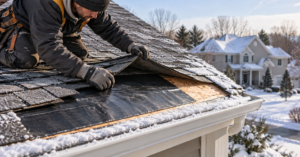
- Damaged or missing shingles
- Problems with roof flashing
- Leaking roof valleys
- Damaged pipe boots or roof vents
- Chimney flashing problems
- Skylight flashing issues
- Wind-driven rain
- Clogged gutters or downspouts
- Hidden damage beneath the roofing materials
A moderate amount of rainfall might not allow sufficient water into the roofing system in order to be visible inside your house when there is a minor defect.
Heavy rainfall alters the scene.
A greater amount of water is moving over the roof, and more moisture becomes exposed to exposed areas in a shorter time frame.
Why Heavy Rain Can Expose a Roofing Problem
Consider the structure of the roof as a mechanism designed to transport fluid from the highest areas to the standard gutters and downpipes. Gentle rainfall could not pose an issue and could even flow straight through the structure. But in the event of a severe storm, there will be plenty of water to pass through those exact regions. The water can get into a roofing structure by means of a weak point, broken part, or inadequate drainage area or standard slit. In addition, there’s a reason why a roof might look like new for a few months, then suddenly begin to leak during an intense rainstorm.
1. Your Gutters May Not Be Handling the Water
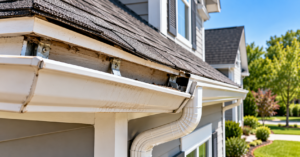
Roof gutters are crucial for draining the water out of the roof. In heavy precipitation, plenty of moisture gets to the edges of the roof in very little time. If the gutters are:
- Clogged
- Damaged
- Sagging
- Improperly sloped
- Too small for the drainage requirements
- Connected to inadequate downspouts
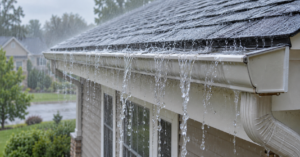
Water may overflow.
Water overflowing may impact the roof’s margin, shingles, roof soffit, exterior siding, and the region surrounding the base.
If the roof begins to leak during heavy downpours, the drainage mechanism must be included as part of the checkup.
2. Your Downspouts May Be Overwhelmed
The gutters can be relatively neat, but during heavy downpours, the downspouts might not be capable of draining fluid out quickly enough.
Your downspout may clog deeper in the system too.
If the water fails to flow correctly, it might get back up or spill from the gutter’s opening.
This may give rise to water control issues at an elevated level.
Verify that water is draining smoothly through the downspouts while it is raining.
If you experience significant flooding during severe storms, it may be appropriate for you to have an expert inspect the drainage system.
3. Damaged or Missing Shingles Can Allow Water In
Shingles provide the first layer of protection against rain.
If shingles are:
- Missing
- Cracked
- Lifted
- Torn
- Loose
- Damaged by wind or weather
water may reach the layers underneath.
A small damaged area may not produce a noticeable leak during light rain.
Heavy rain, however, can send more water into the vulnerable area.
If you suspect damaged shingles, avoid climbing onto the roof yourself.
A ground-level visual inspection can identify obvious missing shingles, while a professional can inspect the roof more closely.
4. Roof Flashing May Be Leaking
Flashing is used around areas where the roof meets another surface or where something passes through the roof.
Common flashing locations include:
- Chimneys
- Roof-to-wall intersections
- Skylights
- Roof valleys
- Vents
- Other roof penetrations
If flashing is damaged, loose, corroded, or improperly installed, heavy rain may expose the weakness.
This can be especially noticeable when rain is driven sideways by strong winds.
5. Roof Valleys Can Leak During Heavy Rain
A roof valley is where two sections of a roof meet.
Rainwater from both sections can flow toward the valley.
That means valleys need to handle a significant amount of water.
If the valley has damaged roofing materials, flashing problems, debris, or another defect, heavy rainfall may overwhelm the vulnerable area.
A leak that appears below a roof valley deserves careful inspection.
6. Chimney Flashing May Be the Problem
Chimneys are another common area to investigate when a roof leaks during heavy rain. The joint between the chimney and roof needs proper flashing to prevent water from entering. Possible problems include loose flashing, corrosion, damaged sealant, improper installation, cracks or deterioration around the chimney, and problems where different flashing components meet. If the leak appears near a chimney, the roof and chimney should be inspected together.
7. Wind-Driven Rain Can Enter Vulnerable Areas
Heavy rain often comes with strong wind. Wind can push rain sideways rather than allowing it to fall directly onto the roof. This can expose areas that normally receive less direct water. Wind-driven rain can affect:
- Flashing
- Roof-to-wall intersections
- Chimneys
- Vents
- Skylights
- Damaged shingles
If your roof leaks only during storms with strong winds, wind-driven rain may be an important clue.
8. Roof Vents Can Be a Source of Leaks
Roof vents create openings through the roofing system.
These openings need appropriate flashing and weather protection.
If the flashing around a vent is damaged or the surrounding roofing materials have deteriorated, heavy rain can enter the area.
You may notice water stains in the attic or ceiling below the vent.
A professional inspection can determine whether the vent, flashing, surrounding shingles, or another nearby component is responsible.
9. Skylights Can Leak During Heavy Rain
Skylights can provide natural light, but they also create an opening in the roof. A skylight leak may be caused by damaged flashing, deteriorated seals, roofing problems around the skylight, problems with the skylight itself, and water draining toward the skylight. If water appears around a skylight during heavy rain, don’t assume that the skylight itself needs to be replaced. The surrounding roof system should be inspected first.
10. A Roof Leak May Be Hidden Under the Roofing Materials
Sometimes the visible problem is not the actual entry point. Water can travel underneath roofing materials before appearing inside the home. Water can pass through a flashing gap and flow through the roof’s decking prior to reaching an interior ceiling. This explains the reason why the mark on a standard ceiling may exist a few feet away from the real cause of a roof defect. You might have to follow the water route by means of the roofing structure to identify the place of access.
11. Plumbing Vent Boots Can Deteriorate
Typical plumbing exhaust pipes run up through the ceiling and must have a closed transition point. Over time, the rubber boot or flashing installed around the conduit might degrade. If the cover is damaged, rain is capable of getting in and around the conduit. Significant precipitation might make the issue apparent as greater quantities of water have been delivered to the impacted area. If you notice a void on the ceiling below a standard plumbing vent, have it examined.
Why Does My Roof Leak During Heavy Rain?
This is a frequently asked question, and the response usually is a combination of water volume as well as pressure. It’s raining moderately. There’s not as much water flowing over the top of the roof. With heavy downpours, you’ll get considerably more precipitation. The more liquid that flows through the crack, the greater the probability that a minor crack in a roofing structure is likely to be detected by heavy rainfall. Windstorms may make the issue more serious by forcing moisture into normal joints, gaps, flashing, and other weak areas. The roof on your house is unlikely to leak under light rainfall, yet it is not waterproof.
Why Does My Ceiling Leak Only During a Downpour?
For instance, if there is a crack in the ceiling of your home, as soon as it rains severely, it means water is filtering in through an opening in the ceiling that is unable to withstand the heavy downpour. Sources can consist of:
- Roof valleys, flashing
- Vents, Chimneys
- Skylights, Damaged shingles
- Roof-to-wall intersections, Drainage problems
The exact cause cannot be determined from the ceiling stain alone.
The roof and, when appropriate, the attic should be inspected to trace the source.
How Can I Find the Source of the Leak?
Start off by finding a spot where moisture is showing up within the home. Keep an eye out for the precise position of the stains, whether or not normal water is leaking, and just how much water is pouring in. And take note if the leak occurs only during excessive precipitation, if there’s a breeze, or if the leaking is close to a fireplace, window, or adjacent walls. If you have no trouble getting up into the attic space, inspect for any indication of humidity.
You may find:
- Wet insulation
- Stained wood
- Water trails
- Damp roof decking
- Rust around nails
- Other evidence of moisture
However, do not assume the wet area is directly below the roof entry point. Water can travel before becoming visible.
Can I Check the Roof Myself?
Check for indications from ground level, for example, missing roof shingles or apparent deterioration. However, attempting to climb on the roof is risky, particularly after downpours or in the event of heavy downpours. Wet shingles are slippery, and worn-out roofing supplies can be dangerous.
You could potentially be able to get a few helpful details even without stepping onto the ceiling. Begin by inspecting for shingles that are missing from the surface, search for leaking drains, inspect the area for obstructions in downspouts, examine through the attic if it is capable of being securely reached, note any internal water spots, and take pictures of apparent exterior decay.
Do not attempt roof access and complete inspection unless you have the right tools for the job at hand.
What Should You Do During Heavy Rain if Your Roof Is Leaking?
If water is entering your home during a storm, focus first on protecting people and property.
Move Items Away From the Leak:
Move furniture, electronics, and other valuables away from the affected area if it is safe to do so.
Collect Dripping Water:
Use a container under active dripping water to help protect the surrounding area.
Protect the Floor:
Use towels or other suitable materials to limit water spreading across the floor.
Document the Damage:
Take photos and videos of Ceiling stains, Active leaks, Wet areas, and Exterior damage visible from the ground.
Be Careful Around Electrical Fixtures:
If water is entering around a light fixture, outlet, or other electrical component, do not touch wet electrical equipment.
Follow appropriate electrical safety precautions and seek professional help when necessary.
Do Not Climb Onto the Roof During the Storm:
Rain, wind, and slippery surfaces can make roof access dangerous. Wait for safe conditions and arrange a professional inspection.
Should You Repair the Leak?
Don’t ignore a roof leak just because it stops when the rain stops. The water may stop entering. But the underlying defect may still be present. Repeated leaks can contribute to damage. It involves:
- Roof decking
- Insulation
- Drywall
- Ceilings
- Walls
- Wood framing
- Interior finishes
The sooner the source is identified, the sooner you can determine what repair is appropriate.
Does a Heavy-Rain Leak Mean I Need a New Roof?
A heavy-rain leak does not mean the entire roof needs replacement. If the problem is localized, the solution may involve repairing:
- A damaged shingle
- Flashing
- A roof vent
- A pipe boot
- A limited roof section
- Another specific component
However, if the roof has widespread deterioration, repeated leaks, or significant age-related problems, a larger roofing project may be appropriate. The condition of the entire roof should be considered before making that decision.
When Should You Schedule a Roof Inspection?
Consider scheduling a professional inspection if:
- It occurs during heavy rain
- The leak keeps returning
- You cannot identify the source
- You have multiple ceiling stains
- Water is appearing around a chimney or skylight
- The attic has wet insulation
- You notice damaged shingles
- Flashing appears damaged
- Gutters overflow during storms
- A previous repair did not solve the problem
A professional inspection can help determine whether the problem is localized or part of a larger roofing issue.
What Happens During a Roof Leak Inspection?
A professional may evaluate both the exterior and interior evidence of the leak. Depending on the situation, the inspection may include:
- Roofing materials, flashing
- Roof valleys, Gutters
- Downspouts, Roof vents
- Pipe boots, Chimneys
- Skylights, Roof-to-wall intersections
- Attic areas, Accessible roof decking
- Signs of previous repairs
The objective is to identify the likely entry point and determine what work may be needed.
How Can You Prevent Heavy-Rain Roof Leaks?
Regular maintenance can help identify potential problems before they become active leaks.
Consider:
Keep Gutters and Downspouts Maintained: Make sure rainwater has a clear path away from the roof.
Have Flashing Checked: Flashing around chimneys, skylights, vents, and roof transitions should be included in professional inspections.
Watch for Visible Roof Damage: From the ground, look for missing or visibly damaged shingles.
Check the Attic: If safely accessible, look for signs of moisture, stains, or damaged insulation.
Address Small Problems Early: A small roofing defect may become more noticeable during the next heavy storm.
Inspect After Severe Weather: If your area experiences significant wind or heavy rainfall, consider having the roof checked if you notice any signs of damage or water intrusion.
FAQs
Why does my roof leak only when it rains hard?
Heavy rain puts more water on the roof in a shorter period. A small weakness in shingles, flashing, valleys, vents, or drainage may not leak during light rain but become overwhelmed during a downpour.
Why does my roof leak during heavy rain but not light rain?
The larger volume of water during heavy rainfall can expose weaknesses that are not noticeable during lighter rain. Strong winds can also push water into vulnerable roof areas.
Can clogged gutters cause a roof leak during heavy rain?
Clogged gutters can cause water to overflow and create drainage problems around the roof edge. Whether they are the direct cause of an interior leak depends on the home’s specific conditions.
Can roof flashing cause leaks during heavy rain?
Yes. Damaged, loose, corroded, or improperly installed flashing can allow water into vulnerable roof joints, particularly when heavy or wind-driven rain reaches the area.
Why does my roof leak around the chimney?
Problems with flashing or the transition between the chimney and roof can allow water to enter. The chimney and surrounding roofing system should be inspected to identify the actual source.
Can a roof vent cause a leak?
Yes. Roof vents pass through the roofing system and require proper flashing and weather protection. Damage around the vent can allow water to enter.
Why does my ceiling leak during a downpour?
A ceiling leak during heavy rain can be caused by damaged roofing materials, flashing, valleys, vents, chimneys, skylights, roof-to-wall transitions, or drainage problems. The visible ceiling stain may not be directly below the source.
Can heavy rain damage a roof that was not leaking before?
Yes. Heavy rainfall and wind can expose existing weaknesses or cause new damage to roofing materials and other components.
Does a roof leak during heavy rain mean I need roof replacement?
No. Some leaks are caused by localized problems that can be repaired. Replacement may be considered when the roof has widespread deterioration or other significant problems.
Should I climb onto my roof to find the leak?
It is generally safer not to climb onto the roof yourself, especially during or immediately after a storm. A professional inspection can evaluate difficult-to-access areas more safely.
Don’t Ignore a Roof That Leaks During Heavy Rain
A roof that leaks only during heavy rain is still a roof that needs attention.
The problem could be something relatively localized, such as damaged flashing or a roof vent. It could also involve drainage, a roof valley, damaged shingles, or another part of the roofing system.
Because water can travel before it becomes visible inside the home, finding the actual source is important.
If your New Jersey roof leaks during heavy rain, National Home Improvements can inspect the roofing system and help determine what type of repair or roofing work may be appropriate for your home. Contact us to discuss your concern and request an inspection or estimate.